



Oct . 28, 2025 12:35
Back to list
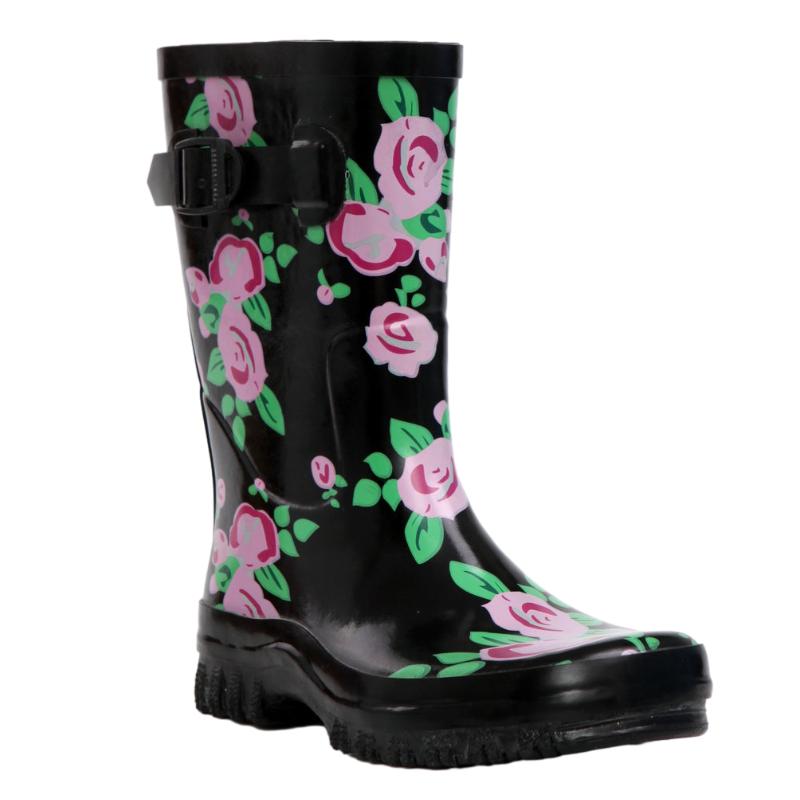
Floral Rain Boots Womens: Waterproof, Non-Slip, Stylish
Field notes on Floral Rain Boots Womens (and why the right pair matters)
I review gear for a living, and every spring I relearn the same lesson: puddles don’t care how cute your outfit is. The Printed Fashion Ladies Rubber Rain boots SYHB11-1 from Landwalk Outdoor strike that oddly satisfying middle ground—fashion-forward floral prints, but with the sort of rubber compound and testing you usually see in utility boots. To be honest, that combo is rarer than you’d think.
What’s trending
In city retail and garden centers, bright prints are outperforming solids by a surprising margin. Consumers want utility with a wink. Meanwhile, brands are quietly upgrading compounds for colder climates (fewer “cold cracks”) and dialing in slip resistance on wet tile. That’s where the SYHB11-1 quietly checks boxes without shouting.
Core specs (real-world, not brochure-speak)
| Model | Printed Fashion Ladies Rubber Rain boots SYHB11-1 |
| Upper/Outsole Material | Vulcanized rubber (NR/SBR blend ≈ 50/50), Shore A 60 ±3 |
| Lining | Cotton/poly knit, 100–120 gsm; moisture-wicking finish |
| Height / Sizes | Mid-calf (≈28–32 cm); EU 36–41 (US W 6–10) |
| Waterproofing | Hydrostatic test 100 kPa / 5 min, no leakage (lab) |
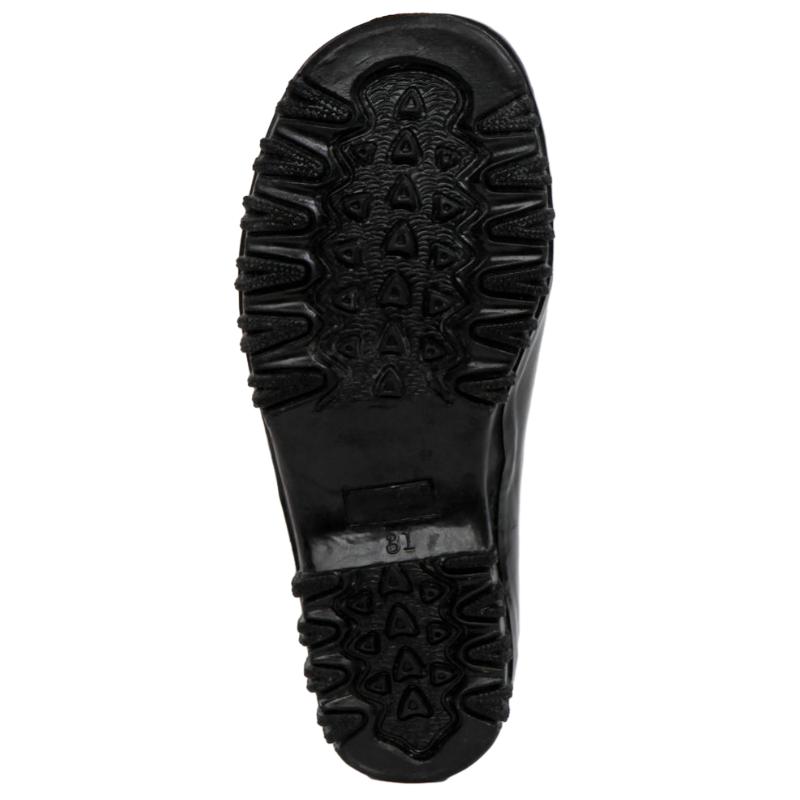
| Slip Resistance | EN ISO 13287 SRA target; µ flat ≈0.34 wet ceramic (sample) |
| Flex/Bending | ISO 20344 flex ≥30,000 cycles, no cracking (typical) |
| Cold Crack | Pass at −20 °C (visual check, lab cabinet) — real use may vary |
| Origin | Room 9-1, Zone F, 3rd Floor, Building D, Science & Technology Industrial Park, 723 Cuiyuan St., Baoding, Hebei |
How they’re made (quick process flow)
- Compounding: NR/SBR with carbon black, antioxidants, zinc oxide, and process oils.
- Calendaring: rubber sheets rolled to spec; floral print applied via rotary screen/transfer film; UV-resistant topcoat.
- Lasting & building: hand-lasted sheets over aluminum lasts; seams overlapped and stitched where needed.
- Vulcanization: curing at ≈150–160 °C to crosslink elastomers for elasticity and tear strength.
- Quality tests: hydrostatic leak check; flex test (ISO 20344); slip on ceramic with detergent (EN ISO 13287).
Use cases (and why shoppers actually buy)
Weekend gardening, dog walks, farmers markets, festival grounds, ferry commutes—these are the everyday battlegrounds. Retailers in coastal cities told me returns dropped when tread depth increased and shafts softened a touch. Many customers say the floral print just “makes ugly weather less annoying,” which, fair.
Compliance, testing, and service life
Factories can align to REACH Annex XVII (PAHs, phthalates), azo-dye limits, and run slip/flex to EN ISO 13287/20344. A typical service life is 2–4 wet seasons for casual wear; heavy-duty farm use shortens that. If you rotate pairs and keep them out of direct sun, they last longer—old-school advice that still works.
Vendor snapshot (quick comparison)
| Vendor | MOQ | Customization | Lead Time | Testing | Price Index |
|---|---|---|---|---|---|
| Landwalk Outdoor (SYHB11-1) | ≈600 pairs | Prints, PMS colors, outsole compound | 35–45 days | EN ISO 13287/20344 in-house/3rd party | $$ (mid) |
| Generic Importer A | ≥1,000 pairs | Limited colorways | 45–60 days | Basic leak test | $ (low) |
| Boutique Brand B | ≈300 pairs | High — custom prints | 60–75 days | Third-party full suite | $$$ (premium) |
Customization and field results
- Options: floral libraries, bespoke artwork, winter compound, gusset or pull-on, branded heel foxing, FSC-mix packaging.
- Case study—Garden retailer, New England: 18% higher sell-through vs solids; returns down to 1.6% (mud-season, 10 weeks).
- Case study—UK festival merch: 2,000 pairs; post-event claims ≈0.9%, mostly sizing. Tread held up in ankle-deep sludge.
If you want the “cheerful but not flimsy” vibe, Floral Rain Boots Womens like the SYHB11-1 make sense. The print resists UV fade better than many fast-fashion pairs I’ve seen, and the slip numbers are, frankly, respectable for the category.
Citations
- EN ISO 13287: Slip resistance test method for footwear.
- EN ISO 20344: Personal protective equipment — Test methods for footwear.
- REACH Regulation (EC) No 1907/2006, Annex XVII (PAHs, phthalates, azo dyes restrictions).
- ASTM D471: Standard Test Method for Rubber Property—Effect of Liquids.
Latest news
-
Ultimate Guide to Choosing the Best Farmers Wellington BootsNewsApr.16,2026
-
The Ultimate Guide to Choosing the Best Professional Farming WelliesNewsApr.09,2026
-
Comprehensive Guide to Choosing the Perfect Field Wellies for Outdoor AdventuresNewsApr.07,2026
-
Choosing the Right Fit for Good Quality Wellies and Outdoor AdventuresNewsApr.04,2026
-
Choosing the Right Fit A Comprehensive Guide to Good Wellies and Outdoor FootwearNewsMar.31,2026
-
Choosing the Right Footwear A Comprehensive Guide to Good Wellington BootsNewsMar.28,2026
-
Choosing the Right Hard Wearing Wellies for Outdoor AdventuresNewsMar.26,2026