



Oct . 02, 2025 12:40
Back to list
Insulated, Breathable Waders—Ready to Fish Warmer, Longer?
Nylon PVC Chest Fishing Wader SY-02: trends, specs, and straight talk from the bank
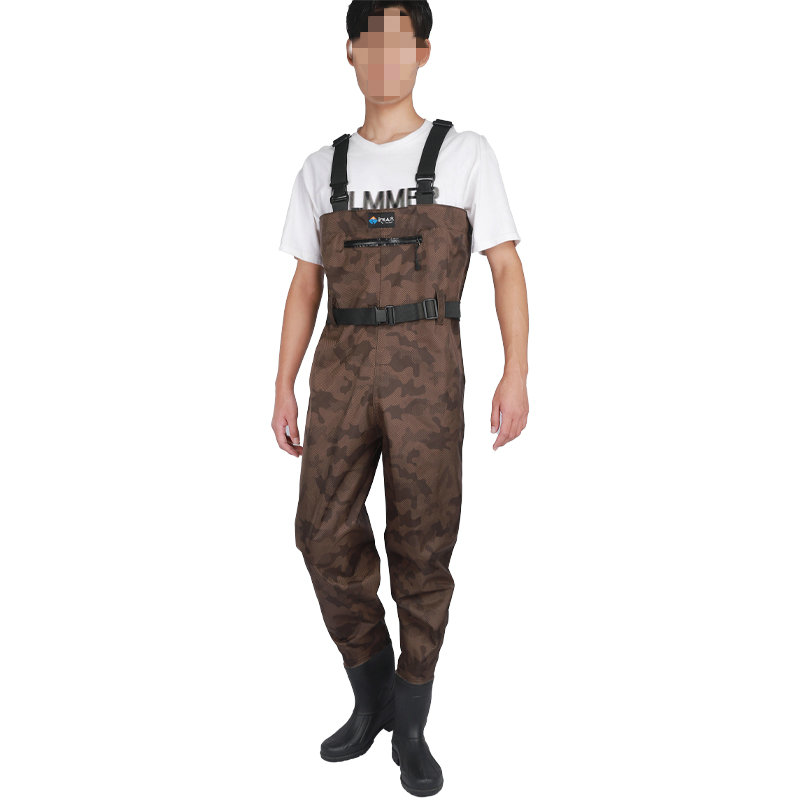
If you spend any time in a river, marsh, or hatchery, you know waders aren’t just gear—they’re your working day. The latest cycle in the market is interesting: breathables get the headlines, but PVC-coated nylon keeps winning for durability-to-price, especially in tough, muddy scenarios. To be honest, that’s what drew me to the Nylon PVC Chest Fishing Wader SY-02. It’s a practical piece of kit with more engineering under the hood than the price suggests.
What’s trending in waders right now
Two themes: ruggedization and compliance. Rugged for field crews, fishery teams, and surf casters who drag gear over riprap. Compliance because buyers now ask for EN 343 waterproof ratings, AATCC hydrostatic data, and even REACH statements. Surprisingly, many customers say they’ll trade “ultra-breathable” for “seam-welded and bombproof,” particularly in cold water where condensation is less of a drama.
Product in focus: SY-02 technical snapshot
The SY-02 is a chest-height, bootfoot design built on PVC-coated nylon—simple, serviceable, and (from my field notes) forgiving in the truck bed. Here’s the quick spec sheet:
| Parameter | SY-02 Typical Value (≈) |
|---|---|
| Base fabric | Nylon with PVC coating, ~0.35–0.45 mm total |
| Seams | High-frequency welded; tape-reinforced in stress zones |
| Boots | PVC boot, cleated outsole; sizes EU 39–46 |
| Waterproof rating | AATCC 127 ≥ 10,000 mm (lab), ASTM D751 hydrostatic pass |
| Cold flex | ISO 4675 pass at −20 °C (material flex, no cracking) |
| Weight | Around 2.5–3.0 kg per pair (size-dependent) |
| Service life | 3–5 seasons typical use; real-world may vary |
How they’re built (materials → methods → tests)
Materials: PVC-coated nylon panels are cut with die sets for consistency. Methods: seams are HF welded, then stress points (inseam, crotch) get tape or patch reinforcements. Boots are bonded to the leg with heat and solvent-activated adhesives; then a perimeter weld. Testing: hydrostatic head per AATCC 127/ASTM D751, seam shear strength (ASTM D751), flex at −20 °C (ISO 4675), and outsole slip checked against ISO 20344 protocols. Final QC includes a 5–10 minute water tank hold—no pinhole leaks allowed. I like that.
Where they’re used
Fisheries and hatcheries, aquaculture ponds, stormwater and culvert maintenance, surf-casting and jetty work, even environmental sampling. A quick case: a municipal team in the Pacific Northwest reported zero seam leaks over a wet season after rotating three sets of waders, averaging 12–15 field days/month. One angler told me the boot cleats bite “better than expected” on algae-glazed rock—still, caution on ceramic-smooth surfaces.
Vendor comparison (real-world procurement view)
| Vendor / Model | Fabric & Seam | Water Column (≈) | Lead Time | Certs | Notes |
|---|---|---|---|---|---|
| Landwalk SY-02 | PVC-nylon, HF welded | ≥10,000 mm | 15–30 days | EN 343 claim; AATCC 127 test | Good value; customization-friendly |
| Generic Import A | PVC-polyester, stitched+taped | 6,000–8,000 mm | 30–45 days | Basic QA docs | Lower cost; seams less robust |
| Premium EU B | Breathable 3L, taped | 20,000+ mm | In-stock/fast | EN 343; ISO 20344 outsole | Lightweight, higher price |
Customization and compliance
Options typically include color, logo print, pocket layout, and boot outsole pattern. Stockingfoot variants are possible on request. Material declarations for REACH and phthalate content are available, plus EN 343 conformance data. For teams, MOQ is reasonable; I’ve seen custom orders ship in under a month when artwork is ready.
Origin and contact
Manufactured and shipped from: Room 9-1, Zone F, 3rd Floor, Building D, Science and Technology Industrial Park, No. 723 Cuiyuan Street, Baoding City, Hebei Province. If you’re speccing waders for a tender, ask for the latest test sheets (AATCC 127, ASTM D751) and the seam-weld QC protocol.
Field notes (short and honest)
Pros: tough legs, easy hose-off, seams that don’t whine. Cons: PVC gets warm in summer; breathability is limited (as expected). My take: for cold rivers, hatcheries, and utility crews, SY-02 hits the practical sweet spot.
Authoritative citations
Latest news
-
Ultimate Guide to Choosing the Best Farmers Wellington BootsNewsApr.16,2026
-
The Ultimate Guide to Choosing the Best Professional Farming WelliesNewsApr.09,2026
-
Comprehensive Guide to Choosing the Perfect Field Wellies for Outdoor AdventuresNewsApr.07,2026
-
Choosing the Right Fit for Good Quality Wellies and Outdoor AdventuresNewsApr.04,2026
-
Choosing the Right Fit A Comprehensive Guide to Good Wellies and Outdoor FootwearNewsMar.31,2026
-
Choosing the Right Footwear A Comprehensive Guide to Good Wellington BootsNewsMar.28,2026
-
Choosing the Right Hard Wearing Wellies for Outdoor AdventuresNewsMar.26,2026