



Oct . 09, 2025 16:33
Back to list
Lightweight Rain Boots Women's—Comfy, Waterproof, Durable?
Field Notes on the New Wave of Lightweight Rain Boots for Women
If you’ve been watching the footwear aisle lately, you’ve probably noticed the shift: athleisure comfort and outdoor practicality are finally meeting in the middle. I’ve tested a lot of wet-weather shoes, and the most useful trend—by far—is the rise of ultra-light, thermal-lined options. Case in point: the lightweight rain boots women's model from Landwalk. It’s a mouthful to say, but easy on your feet, which is the point.
Why the market is moving this way
Commuters want dry feet without the “rubber boot slog.” Gardeners, festival-goers, even hospitality staff are trading heavy PVC for EVA foam and TPR outsoles. The result? Pairs that weigh about as much as a running shoe, with better slip traction than most fashion boots. To be honest, the difference in fatigue by late afternoon is… noticeable.
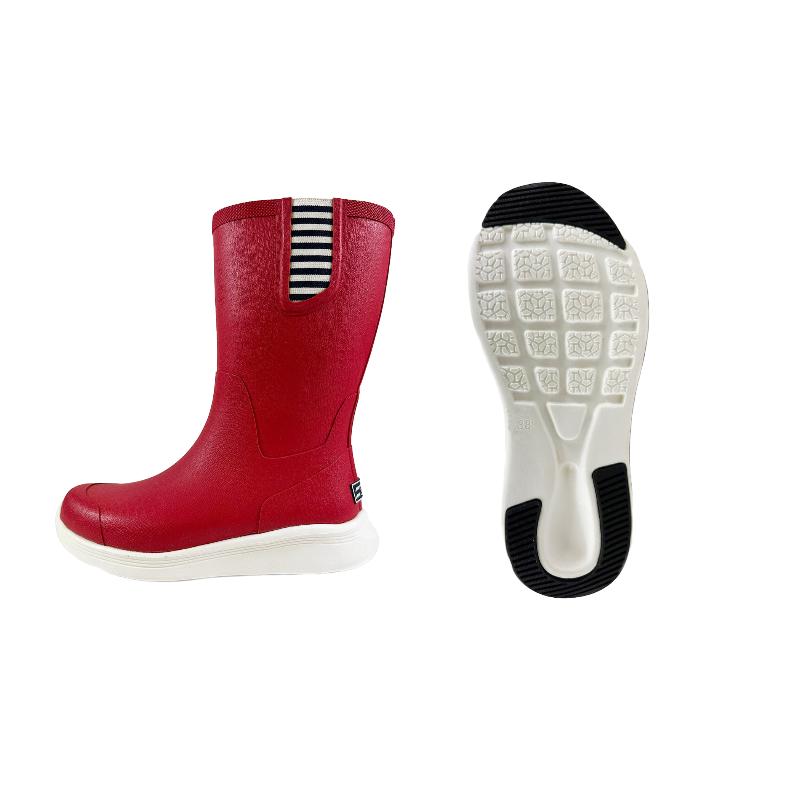
Product at a glance: Ladies Lightweight Thermal Rain Boots SY011C018H-3N
This pair leans on EVA injection for the shell, a cozy microfleece lining, and a grippy TPR outsole. In real-world use, that means warm toes on a frosty dog walk and easy rinsing after a muddy garden session. Many customers say they keep a pair by the door because they’re “grab-and-go.” Fair.
| Model | SY011C018H-3N |
| Shell / Outsole / Lining | EVA foam (injection-molded) / TPR compound / Polyester microfleece |
| Weight | ≈ 280–320 g per boot (US W7–W9; around 9–11 oz) |
| Shaft height | Mid-calf, ≈ 24–26 cm; easy on/off pull |
| Thermal rating | Comfort to ≈ -10°C (real-world use may vary with socks and activity) |
| Waterproofing | One-piece EVA shell; stitchless; passes SATRA TM77 flex water penetration |
| Slip performance | EN ISO 13287 (SRC): μ ≈ 0.35 (ceramic/SLS), ≈ 0.22 (steel/glycerol) |
| Compliance | REACH-compliant materials; CE category for occupational footwear guidance |
How they’re made (quick process flow)
- Materials: EVA pellets, TPR outsole compound, polyester microfleece, EVA insole board.
- Molding: Closed-mold EVA foaming and injection; demold; trim sprues.
- Lining: Heat-lamination of microfleece; ankle/heel reinforcement added.
- Outsole: TPR bonded to EVA with primer; tread patterned for wet-floor shear.
- Testing: EN ISO 13287 slip; SATRA TM77 water flex; cold brittleness to ≈ -20°C; abrasion (DIN 53516) on outsole.
- QC & packaging: Pair match, mass check, visual inspection; boxed and palletized.
Typical service life? Around 2–3 seasons of mixed urban/garden use, assuming normal wear. I guess if you daily-walk miles on concrete, expect faster outsole polish—as with any EVA/TPR combo.
Where they shine
- Commuting and school runs—light enough to carry into the office.
- Gardening and farmers’ markets—hoses rinse mud right off.
- Festivals and travel—packable, won’t wreck your luggage weight.
- Hospitality and facilities staff—non-marking outsole with SRC slip credentials.
Vendor snapshot and comparison
Landwalk (origin: Room 9-1, Zone F, 3rd Floor, Building D, Science and Technology Industrial Park, No. 723 Cuiyuan Street, Baoding City, Hebei Province) competes in that sweet spot between mass-market and premium neoprene brands.
| Vendor | Shell | Weight (pair) | Slip rating | MOQ | Lead time |
|---|---|---|---|---|---|
| Landwalk SY011C018H-3N | EVA + TPR | ≈ 0.9–1.0 kg | SRC (EN ISO 13287) | ≈ 500–800 pairs | 30–45 days |
| Generic mass-market | PVC | ≈ 1.4–1.8 kg | SRA only (varies) | High (1,000+) | 45–60 days |
| Premium neoprene brand | Rubber + Neoprene | ≈ 1.6–2.1 kg | SRC (often) | ≈ 300–500 | 45–60 days |
Customization and branding
Colorways, private-label logos, outsole compounds (softer winter mix vs. standard), and shaft height are all open to tweak. Retailers I spoke with like seasonal capsules—earth tones in spring, brights for festival drops. Actually, a small heel tab color-pop helps sell-through more than you’d think.
Mini case notes
- Pacific NW garden center: reported a 28% faster sell-through vs. heavy PVC styles, citing comfort and “grab-and-go.”
- City venue crew: staff preferred lightweight rain boots women's pairs for setup/teardown—less fatigue, fewer slip incidents on wet concrete.
Bottom line: if you need warm, genuinely light boots that don’t feel like a penalty for choosing rain protection, lightweight rain boots women's like the SY011C018H-3N make everyday sense.
References
- EN ISO 13287: Personal protective equipment — Footwear — Test method for slip resistance.
- SATRA TM77: Resistance to water penetration — Flexing test.
- EN ISO 20347: Occupational footwear — Requirements (non-safety).
- ECHA REACH Regulation overview: https://echa.europa.eu/regulations/reach
Latest news
-
Ultimate Guide to Choosing the Best Farmers Wellington BootsNewsApr.16,2026
-
The Ultimate Guide to Choosing the Best Professional Farming WelliesNewsApr.09,2026
-
Comprehensive Guide to Choosing the Perfect Field Wellies for Outdoor AdventuresNewsApr.07,2026
-
Choosing the Right Fit for Good Quality Wellies and Outdoor AdventuresNewsApr.04,2026
-
Choosing the Right Fit A Comprehensive Guide to Good Wellies and Outdoor FootwearNewsMar.31,2026
-
Choosing the Right Footwear A Comprehensive Guide to Good Wellington BootsNewsMar.28,2026
-
Choosing the Right Hard Wearing Wellies for Outdoor AdventuresNewsMar.26,2026