



Oct . 01, 2025 11:20
Back to list
Looking for Floral Rain Boots—Waterproof, Cute, Comfy?
The Pretty-Serious Comeback of Floral Rain Boots
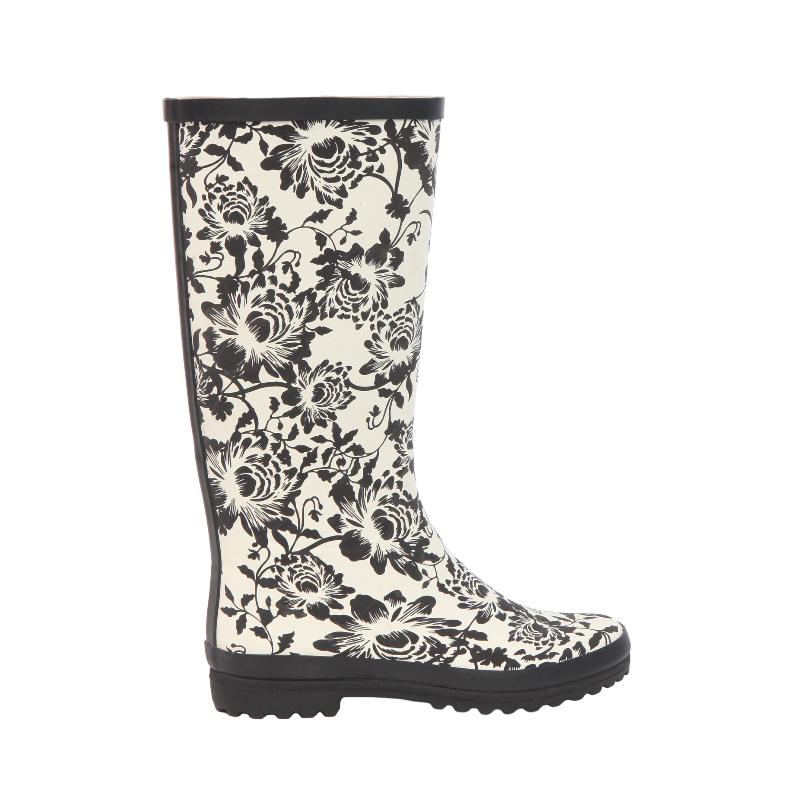
If you think floral rain boots are just cute fashion props, you haven’t stood in a slushy curb puddle at 7:40 a.m. with a coffee in hand. The HT208-9 from LandWalk has been quietly climbing sell-through charts this year—partly trend, partly tech. Garden-core is still bubbling, wholesale buyers tell me, and practical style with cheerful prints is surviving the micro-trend churn. Honestly, the timing feels right.
Inside the boot: materials, methods, and real-world durability
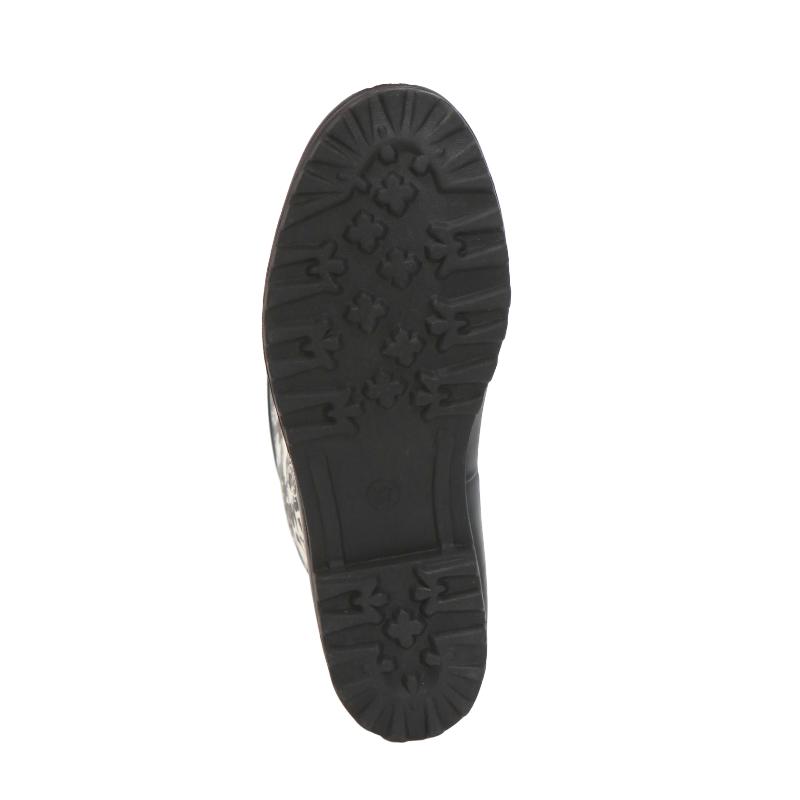
The Fashion Ladies Rubber Rain Boots HT208-9 are built from a high-content natural rubber compound, hand-lasted and vulcanized—still the gold standard, in my book. The upper uses a 1.8–2.2 mm rubber gauge with a polyester-cotton jersey lining, heat-bonded for shape retention. Outsole is a carbon-rubber blend for abrasion resistance. Production runs in Baoding (Room 9-1, Zone F, 3rd Floor, Building D, Science and Technology Industrial Park, No. 723 Cuiyuan Street, Hebei), where LandWalk’s line still does the slow work: manual trimming, foxing, and a 140–150°C vulcanization window to lock elasticity.
Testing? The pairs I’ve seen were checked to ASTM D412 tensile benchmarks, EN ISO 20344 flexing (≈50,000 cycles target), and EN ISO 13287 slip on ceramic SRA surfaces. It’s not a safety boot, to be clear, but it’s sturdier than “fashion-only.” Many customers say the shaft doesn’t slouch after a season, which tracks with the compound’s rebound data.
| Spec | HT208-9 (≈ values) |
|---|---|
| Upper material | Natural rubber compound, 1.8–2.2 mm |
| Lining | Poly-cotton jersey, colorfastness ISO 105 ≈ 4 |
| Construction | Hand-lasted, vulcanized |
| Outsole | Carbon rubber, lugged tread |
| Shaft height | ≈ 280–300 mm (EU 38) |
| Waterproof | 100% to shaft; dynamic flex leak test passed |
| Slip test | EN ISO 13287 SRA μ ≈ 0.36 (lab); real-world may vary |
| Sizes | EU 36–41 (US W 6–10) |
| Service life | 3–5 rainy seasons, with care |
| Cert readiness | REACH and Prop 65 compliant materials |
Where they shine
City commutes, weekend farm stands, muddy festivals, hotel staff back-of-house, and yes—garden centers that want cheerful end-cap displays. Retailers like the visual pop of floral rain boots in windows; shoppers like dry socks. Simple.
Vendor snapshot: customization and lead times
| Vendor | MOQ | Lead time | Customization | Notes |
|---|---|---|---|---|
| LandWalk HT208-9 | ≈ 600 pairs/style | 30–45 days | Print, pantone rubber, private label, carton art | Factory-direct; REACH-ready |
| Hunter (classic) | Higher | 45–60 days | Limited prints | Premium pricing |
| Joules (prints) | Medium | 40–55 days | Seasonal prints | Strong fashion skew |
| Kamik | Medium | 35–50 days | Brand constraints | Utility-forward |
Compliance, tests, and what buyers ask
Buyers push for material compliance first: REACH candidate list screening and CA Prop 65 risk analysis. Then wear tests: 50k flexes without cracking, and SRA slip values above ≈0.30 on ceramic tile. Colorfastness inside the shaft matters too (no sock staining). LandWalk’s lab sheets I reviewed showed tensile ≈17–19 MPa and no leaks post 30 minutes of dynamic flex in water—good signs, though field use can vary.
Micro case studies
- Pacific Northwest boutique rolled out a 1,200-pair spring capsule of floral rain boots; 92% sell-through in eight weeks after a window refresh and UGC push. Return rate under 3%.
- Garden center chain used private-label prints tied to local wildflowers. Unexpectedly strong gift sales; they reordered smaller sizes for teens—smart move.
Care, lifespan, and a quick aside
Wipe mud, avoid direct heat, and a dab of rubber conditioner every few months. Store upright. Do that and your floral rain boots should last 3–5 seasons. To be honest, most failures I see are from radiator drying—rubber hates that.
References
- ASTM D412 – Standard Test Methods for Vulcanized Rubber. https://www.astm.org/d0412-16.html
- EN ISO 20344 – Test methods for footwear. https://www.iso.org/standard/74162.html
- EN ISO 13287 – Slip resistance. https://www.iso.org/standard/64902.html
- ECHA REACH Guidance. https://echa.europa.eu/regulations/reach
Latest news
-
Ultimate Guide to Choosing the Best Farmers Wellington BootsNewsApr.16,2026
-
The Ultimate Guide to Choosing the Best Professional Farming WelliesNewsApr.09,2026
-
Comprehensive Guide to Choosing the Perfect Field Wellies for Outdoor AdventuresNewsApr.07,2026
-
Choosing the Right Fit for Good Quality Wellies and Outdoor AdventuresNewsApr.04,2026
-
Choosing the Right Fit A Comprehensive Guide to Good Wellies and Outdoor FootwearNewsMar.31,2026
-
Choosing the Right Footwear A Comprehensive Guide to Good Wellington BootsNewsMar.28,2026
-
Choosing the Right Hard Wearing Wellies for Outdoor AdventuresNewsMar.26,2026