



Aug . 31, 2025 02:00
Back to list
Ultimate Waders: Insulated Chest & Hip Options for Sale
Strategic Application of Industrial Waders in Demanding Environments
In diverse industrial and commercial settings, ensuring the safety and operational efficiency of personnel working in wet, hazardous, or submerged conditions is paramount. High-performance waders are critical personal protective equipment (PPE), extending beyond recreational use to become indispensable tools for professionals across various sectors. This comprehensive analysis delves into the technical specifications, manufacturing intricacies, application versatility, and strategic advantages of modern industrial waders, specifically highlighting their role in enhancing safety and productivity in B2B operations. We will explore the characteristics of solutions like the Nylon PVC Chest Fishing Wader SY-02, demonstrating how specialized designs meet rigorous industry demands.
Prevailing Industry Trends in Protective Aquatic Apparel
The market for industrial protective apparel, including specialized waders, is undergoing significant evolution driven by several key trends. There is an increasing demand for materials that offer superior durability, enhanced chemical resistance, and improved ergonomic design to minimize user fatigue during prolonged use. Innovations in material science are leading to lighter, yet more robust, fabric laminates, providing a better balance between protection and comfort. Furthermore, the emphasis on regulatory compliance and workplace safety standards (e.g., OSHA in the U.S., various EU directives for PPE) is pushing manufacturers to develop products with verifiable performance metrics. The growth of sectors such as environmental remediation, infrastructure maintenance, and aquaculture processing fuels the market for specialized solutions, including hip boots for sale and hip waders for sale that cater to specific depth and mobility requirements. Manufacturers are also integrating features like reinforced knee pads, abrasion-resistant shins, and advanced sole designs for enhanced traction and safety, directly addressing operational challenges faced by B2B clients.
Technical Specifications: Focusing on Nylon PVC Chest Fishing Wader SY-02
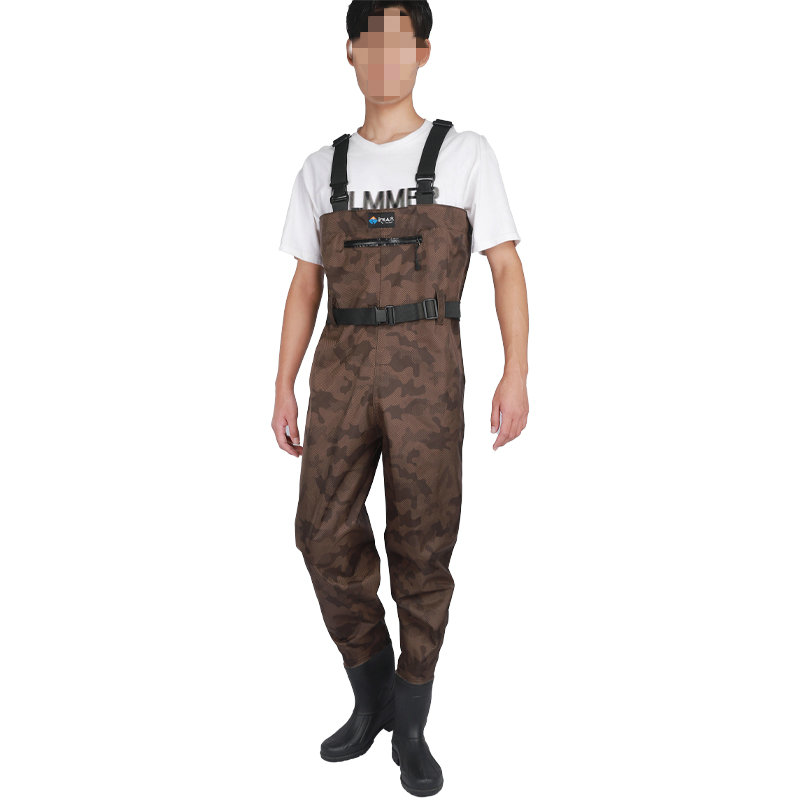
Understanding the technical specifications of industrial waders is crucial for procurement and engineering decision-makers. The Nylon PVC Chest Fishing Wader SY-02, a representative example of robust protective gear, exemplifies the blend of material science and functional design engineered for challenging aquatic environments.
Material Composition and Properties:
- Nylon Fabric: Serves as the base textile, providing structural integrity, high tensile strength, and excellent tear resistance. Nylon’s inherent durability ensures the wader withstands abrasive contact with rough surfaces, a common challenge in industrial settings.
- PVC Coating: A robust polyvinyl chloride (PVC) layer is laminated onto the nylon. This coating delivers superior waterproofing, effectively repelling water and preventing ingress. Beyond its impermeability, PVC offers significant resistance to a wide range of chemicals, oils, and greases, making it suitable for environments where exposure to such substances is probable. Its smooth surface also aids in easy cleaning and decontamination.
- Sole Material: Typically features a hard-wearing PVC or rubber sole with aggressive tread patterns for enhanced grip on slippery or uneven surfaces, minimizing the risk of slips and falls.
Key Performance Parameters:
- Waterproof Rating: Industrial waders are designed to be 100% waterproof, with seams sealed through advanced techniques like high-frequency welding to prevent any water penetration under pressure.
- Abrasion Resistance: Critical for longevity, measured by standardized tests to ensure the material can withstand repeated friction without compromising integrity.
- Chemical Resistance: Crucial for specific industrial applications, tested against common industrial chemicals, solvents, and lubricants.
- Puncture Resistance: The ability to resist penetration from sharp objects, a vital safety feature in environments with debris.
Product Specification Table: Nylon PVC Chest Fishing Wader SY-02
| Parameter | Specification |
|---|---|
| Product Model | Nylon PVC Chest Fishing Wader SY-02 |
| Material Composition | Nylon Fabric with PVC Coating |
| Color Options | Standard Green, Customizable |
| Seam Construction | High-Frequency Welding (100% Waterproof) |
| Boot Type | Integrated PVC Boot with Cleated Sole |
| Suspender System | Adjustable Webbing Straps with Quick-Release Buckles |
| Water Column Rating | > 20,000 mm (ASTM D751 Equivalent) |
| Abrasion Resistance | Exceeds EN 343 requirements |
| Chemical Resistance | Resistant to dilute acids, bases, oils (ASTM F739 Equivalent) |
| Target Industries | Wastewater, Utilities, Construction, Environmental |
Advanced Manufacturing Process of Industrial Waders
The production of high-quality industrial waders involves a meticulous multi-stage process, integrating advanced textile engineering with precision manufacturing techniques to ensure unparalleled performance and durability. This commitment to detail guarantees that each pair of waders meets stringent safety and operational standards.
Schematic Steps in Wader Manufacturing:
- Raw Material Procurement & Inspection: Sourcing high-grade Nylon fabric and PVC compounds. Comprehensive inspection for material consistency, weave integrity, and chemical purity to ensure compliance with material specifications.
- Fabric Lamination: The Nylon textile is precisely coated with multiple layers of specialized PVC polymer. This process, often involving calendering or knife-over-roll coating, ensures uniform thickness, optimal adhesion, and the formation of a robust, waterproof, and chemical-resistant barrier.
- Precision Pattern Cutting: Large rolls of laminated fabric are fed into advanced CNC cutting machines. These machines utilize optimized cutting algorithms to precisely cut individual wader components (e.g., front panels, back panels, gussets) with minimal material waste and exact dimensions.
- High-Frequency Welding / Heat Sealing: Unlike traditional stitching which can compromise waterproofing, industrial protective gear employs high-frequency (HF) welding or thermal bonding. This technique uses electromagnetic energy or heat to melt and fuse the PVC layers of two fabric pieces together at the molecular level, creating an impenetrable, homogenous, and incredibly strong seam that is 100% waterproof.
- Boot Integration: Pre-formed, durable PVC boots are fused to the wader body using specialized molding and welding techniques, ensuring a seamless, watertight connection that can withstand significant stress. For options like insulated chest waders for sale, the boot might also be insulated and feature reinforced toe/shank areas.
- Accessory Attachment & Reinforcement: Features such as adjustable suspenders, quick-release buckles, internal pockets, and reinforced knee/seat patches are securely attached using welding or heavy-duty stitching on non-critical areas, or integrated during the welding process for maximum integrity.
- Rigorous Quality Control & Testing: Each finished wader undergoes a multi-point inspection. This includes air pressure tests to detect pinhole leaks, full water submersion tests in specialized tanks, seam strength tests, and visual inspections for material defects. Adherence to standards like ISO 9001 for quality management and relevant ASTM or EN standards for material performance is strictly maintained.
- Packaging & Dispatch: Waders are cleaned, folded, and packaged to prevent damage during transit, ready for distribution to industrial clients.
This sophisticated manufacturing paradigm, which prioritizes material science and advanced bonding technologies, ensures a service life often exceeding five years under typical industrial usage conditions, significantly outperforming conventional alternatives. The advantages in typical application scenarios include enhanced worker safety, reduced equipment downtime due to water ingress, and superior resistance to corrosive industrial fluids.
Technical Advantages for Industrial Operations
The deployment of purpose-built industrial waders offers a range of technical advantages critical for operational continuity and worker safety in challenging B2B environments.
- Uncompromised Waterproofing & Chemical Resistance: Utilizing advanced PVC lamination and high-frequency welded seams, these waders provide an impenetrable barrier against water, as well as a broad spectrum of industrial chemicals, oils, and contaminants. This protects workers from skin exposure and maintains internal dry conditions, critical for health and comfort.
- Exceptional Durability & Puncture Resistance: The robust nylon base fabric combined with thick PVC coating results in superior resistance to tears, abrasions, and punctures from sharp objects commonly encountered in construction sites, wastewater facilities, or agricultural operations. This extends the product's service life and reduces replacement costs.
- Enhanced Safety Features: Integrated boots often feature aggressive, anti-slip tread patterns, providing superior traction on wet, muddy, or uneven surfaces. Options for reinforced toes (e.g., steel or composite) add crush protection, adhering to occupational safety standards.
- Ergonomic Design for Comfort and Mobility: Despite their robust construction, modern industrial waders are designed with articulated knees and adjustable suspender systems to maximize comfort and freedom of movement, reducing worker fatigue during long shifts. This is particularly important for tasks requiring bending or kneeling.
- Low Maintenance & Easy Decontamination: The smooth, non-porous PVC surface is inherently easy to clean, allowing for quick wash-down and effective decontamination, crucial in preventing the spread of contaminants in environmental and wastewater applications.
Versatile Application Scenarios and Target Industries
The robust design and specialized features of industrial protective apparel make them indispensable across a multitude of demanding B2B environments where personnel frequently encounter wet or contaminated conditions. Their utility extends far beyond traditional fishing, becoming a critical piece of PPE for professionals.
- Wastewater Treatment & Municipal Utilities: Technicians performing maintenance, inspections, or repairs within sewage systems, pumping stations, or settling tanks require full waterproof protection and chemical resistance. This equipment provides a crucial barrier against biological contaminants and corrosive agents.
- Construction & Infrastructure Development: Workers engaged in foundation pouring, culvert installation, bridge maintenance, or any activity in flooded excavation sites rely on this gear to remain dry and safe. This includes insulated hip waders for sale for cooler environments or specific projects.
- Environmental Remediation & HAZMAT Operations: Personnel involved in cleaning up spills, managing contaminated waterways, or conducting environmental assessments in wetlands require durable, chemical-resistant protective gear to guard against hazardous materials.
- Aquaculture & Fisheries Management: For large-scale fish farming, shellfish cultivation, or aquatic research, waders are essential for tasks such as net repair, equipment maintenance, and stock management in ponds or processing facilities.
- Petrochemical & Energy Sector Maintenance: While direct immersion is less common, maintenance crews working near cooling towers, pipeline leaks, or in areas prone to chemical spills and puddles benefit from the robust protection of industrial protective gear, safeguarding against corrosive fluids.
- Agriculture & Irrigation: Farmers and irrigation specialists managing flood systems, maintaining drainage ditches, or working in water-logged fields require durable gear for comfort and protection against mud and water.
Vendor Comparison and Selection Criteria for Industrial Waders
Selecting the appropriate industrial waders requires careful consideration of various factors beyond initial cost. B2B decision-makers should evaluate vendors based on product quality, material innovation, adherence to safety standards, customization capabilities, and post-sales support.
Key Selection Criteria:
- Material & Construction: Assess the primary material (e.g., PVC, Neoprene, breathable laminates) and the seam sealing method (welded vs. stitched/taped) for suitability to specific environmental and chemical exposures.
- Durability & Reinforcement: Look for reinforced knee, seat, and shin areas, especially in high-wear applications. Material thickness (e.g., denier count for nylon, mil thickness for PVC) indicates robustness.
- Safety & Certifications: Verify compliance with relevant PPE standards (e.g., CE EN ISO 20345 for safety footwear, EN 343 for protective clothing against rain). Check for integrated safety features like steel toe caps or anti-slip soles.
- Comfort & Ergonomics: Evaluate design elements such as adjustable suspenders, articulated patterns, and lightweight construction to ensure worker comfort during extended shifts.
- Vendor Reputation & Support: Consider the vendor's track record, ability to provide customized solutions, warranty policies, and the availability of responsive customer service and technical support.
Comparative Overview of Wader Types:
| Feature | Nylon PVC Waders (e.g., SY-02) | Neoprene Waders | Breathable Waders (e.g., GORE-TEX) |
|---|---|---|---|
| Primary Use | Industrial, Heavy-Duty, Chemical Exposure | Cold Weather, Insulated Tasks | Active Use, Warm Weather, Comfort Focus |
| Material Properties | High durability, excellent chemical/abrasion resistance, 100% waterproof. | Good insulation, flexible, moderate abrasion resistance, waterproof. | Breathable, lightweight, comfortable, high waterproof rating. |
| Seam Construction | High-frequency welding (Superior Seal) | Glued and taped (Good Seal) | Stitched and seam-taped (Excellent Seal) |
| Breathability | Low | Low | High |
| Insulation | Minimal (requires layering) | High (natural insulator) | Minimal (requires layering, or insulated chest waders for sale variants) |
| Typical Price Point | Economical to Moderate | Moderate to High | High |
Customized Solutions for Specialized Needs
Recognizing that every industrial operation presents unique challenges, leading manufacturers offer customized protective solutions tailored to specific B2B requirements. This bespoke approach ensures optimal protection, enhanced functionality, and seamless integration with existing safety protocols.
- Material and Thickness Variations: Adjusting the PVC coating thickness for increased abrasion or chemical resistance in ultra-demanding environments. Options for different base fabrics if specific mechanical properties are required.
- Integrated Safety Features: Custom integration of steel or composite toe caps, puncture-resistant midsoles, or specialized anti-slip sole compounds to meet stringent safety footwear standards (e.g., EN ISO 20345).
- Reinforcement and Padding: Strategic addition of extra layers of material or padding in high-wear areas like knees, shins, and seat, significantly extending the life of the wader in abrasive working conditions.
- Pocket and Attachment Systems: Design and placement of specific pockets (e.g., waterproof chest pockets, tool loops, D-rings) to accommodate instruments, radios, or other essential gear for workers.
- Branding and Identification: Incorporation of company logos, reflective strips for enhanced visibility, or color-coding for departmental identification, improving workplace safety and corporate identity.
- Sizing and Fit: Development of extended size ranges or custom patterns to ensure a comfortable and safe fit for all personnel, minimizing bulk and maximizing mobility.
Real-World Application Case Studies
Case Study 1: Municipal Wastewater Treatment Plant Upgrade
A major municipal wastewater treatment plant (WWTP) initiated an upgrade project requiring extensive maintenance and repair work within primary sedimentation tanks and aeration basins. Workers faced constant exposure to highly corrosive wastewater, sludge, and biological contaminants. Traditional protective gear proved inadequate, showing rapid degradation and failing to prevent water ingress.
Solution Implemented: The WWTP partnered with a leading supplier to implement custom-reinforced Nylon PVC chest waders with enhanced chemical resistance and extra-thick PVC coating on the lower body and boot area. These waders featured integrated steel-toe boots for impact protection and anti-slip soles to navigate slippery concrete surfaces.
Results: The deployment of these specialized protective garments led to a dramatic reduction in equipment failure rates, extending the service life of protective gear by over 150%. Worker safety incidents related to water exposure or chemical splash decreased by 90%, and the ease of decontamination significantly improved hygiene. The operational efficiency of maintenance crews saw a 20% increase due to enhanced comfort and confidence in their PPE.
Case Study 2: Coastal Offshore Wind Farm Cable Laying
During the installation of subsea power cables for a new offshore wind farm, shore-based teams were tasked with trenching and pulling cables through shallow, muddy coastal waters and tidal flats. The environment presented challenges including abrasive sand, sharp shell fragments, and fluctuating water levels, demanding highly durable and puncture-resistant protective apparel.
Solution Implemented: The project selected heavy-duty Nylon PVC chest waders, specifically designed with reinforced shins and knees, and equipped with a robust, self-cleaning cleated sole for superior traction in soft sediment. The high-frequency welded seams were a critical factor in ensuring long-term watertight integrity against the harsh saltwater environment.
Results: The specialized waders proved instrumental in maintaining worker safety and comfort throughout the project. Incidents of punctures and tears were virtually eliminated, avoiding costly downtime and ensuring continuous work progress. The durability of the protective gear directly contributed to meeting project deadlines and reducing the overall PPE procurement budget due to extended product longevity.
Ensuring Trustworthiness: FAQ, Lead Time, Warranty & Support
Frequently Asked Questions (FAQ)
- Q1: What is the expected service life of industrial Nylon PVC waders?
- A1: With proper care and maintenance, industrial-grade Nylon PVC waders typically offer a service life of 3 to 5 years, often exceeding this in less demanding applications. This is significantly longer than consumer-grade alternatives due to superior materials and construction.
- Q2: Are these waders suitable for chemical exposure?
- A2: Yes, the PVC coating provides excellent resistance to a wide range of dilute acids, bases, oils, and greases commonly found in industrial settings. For specific chemical resistance requirements, please consult our technical data sheets or contact our sales engineers.
- Q3: How do I choose the correct size?
- A3: We provide detailed sizing charts based on chest, inseam, and foot measurements. It's recommended to size up if between sizes to allow for layering and maximum comfort. Custom sizing options are also available for bulk orders.
- Q4: Can these waders be repaired?
- A4: Minor punctures or tears in the PVC material can often be repaired using specialized patch kits, extending the functional life of the product. Our customer support can provide guidance on appropriate repair methods.
Lead Time & Fulfillment Details
Standard orders for in-stock industrial protective gear are typically processed and shipped within 3-5 business days. For bulk orders or customized solutions, lead times may vary from 2-4 weeks, depending on material availability and customization complexity. We maintain efficient supply chain logistics to ensure timely delivery to our B2B clients globally. Detailed lead time estimates are provided upon quotation and order confirmation.
Warranty Commitments
Our industrial waders, including the Nylon PVC Chest Fishing Wader SY-02, come with a comprehensive 12-month manufacturer's warranty against defects in materials and workmanship from the date of purchase. This warranty covers manufacturing flaws that lead to leakage or structural failure under normal industrial usage. Exclusions apply to damage resulting from misuse, improper storage, or normal wear and tear. Detailed warranty terms are available upon request.
Customer Support & After-Sales Service
We are committed to providing exceptional customer support and after-sales service. Our dedicated team of technical representatives is available to assist with product selection, technical inquiries, order tracking, and warranty claims. We offer multilingual support and aim for rapid response times to ensure our clients receive prompt and effective assistance.
Authoritative Certifications and Partner Engagements
Our commitment to quality, safety, and reliability is underscored by adherence to international standards and strategic partnerships. Our manufacturing facilities typically operate under ISO 9001:2015 certified quality management systems, ensuring consistent product excellence from design to delivery. While specific product certifications like CE marking for PPE are met where applicable (e.g., for integrated safety footwear), our core focus remains on engineering products that consistently exceed industry benchmarks for durability and protection. We proudly partner with numerous B2B clients across diverse industrial sectors, serving as a trusted supplier for their critical protective apparel needs.
Conclusion
High-performance industrial waders represent a critical investment for organizations operating in challenging wet or contaminated environments. By understanding the detailed technical specifications, advanced manufacturing processes, and diverse application scenarios, B2B decision-makers can select solutions that not only ensure worker safety and compliance but also drive operational efficiency and long-term cost savings. The Nylon PVC Chest Fishing Wader SY-02 exemplifies the robust, reliable protection demanded by modern industrial applications, underscoring the value of specialized PPE in safeguarding personnel and critical operations.
References
- ISO. (2015). ISO 9001:2015 – Quality management systems – Requirements. International Organization for Standardization.
- ASTM International. (2020). ASTM D751 – Standard Test Methods for Coated Fabrics. ASTM International.
- European Committee for Standardization. (2019). EN 343:2019 – Protective clothing – Protection against rain. CEN.
- Occupational Safety and Health Administration (OSHA). (2023). Personal Protective Equipment. U.S. Department of Labor.
Latest news
-
Ultimate Guide to Choosing the Best Farmers Wellington BootsNewsApr.16,2026
-
The Ultimate Guide to Choosing the Best Professional Farming WelliesNewsApr.09,2026
-
Comprehensive Guide to Choosing the Perfect Field Wellies for Outdoor AdventuresNewsApr.07,2026
-
Choosing the Right Fit for Good Quality Wellies and Outdoor AdventuresNewsApr.04,2026
-
Choosing the Right Fit A Comprehensive Guide to Good Wellies and Outdoor FootwearNewsMar.31,2026
-
Choosing the Right Footwear A Comprehensive Guide to Good Wellington BootsNewsMar.28,2026
-
Choosing the Right Hard Wearing Wellies for Outdoor AdventuresNewsMar.26,2026