


Rubber boots wholesale refers to the bulk procurement of waterproof footwear designed for industrial, agricultural, and specialized outdoor use. For businesses and distributors, sourcing high-quality waterproof boots in volume is essential to ensure workforce safety and maintain inventory for seasonal demands in diverse climates.
Many procurement managers struggle with the trade-off between low unit costs and long-term durability. Inferior materials often lead to premature leaking or sole degradation, increasing the total cost of ownership. Understanding the nuances of material composition and manufacturing standards is critical for optimizing supply chain efficiency.
This guide examines the strategic factors of rubber boots wholesale, from material selection and application scenarios to supplier evaluation. It aims to provide procurement professionals with a technical framework to select the most durable and cost-effective waterproof footwear solutions.

1Fundamentals of Bulk Waterproof Footwear Sourcing

Sourcing rubber boots at a wholesale level requires more than just price comparison; it demands a deep understanding of the intended operational environment. Whether the boots are for army camouflage, fishing, or industrial safety, the primary goal is to maintain a complete waterproof seal while providing ergonomic support for long-term wear.
The wholesale model allows enterprises to standardize their safety equipment across large teams, ensuring that every worker meets the necessary protection standards. This consistency reduces the risk of workplace injuries related to moisture-induced slips or chemical exposure.
From a supply chain perspective, establishing a partnership with a manufacturer like Baoding Landwalk Outdoor Products Co.,Ltd provides stability in lead times and ensures that production capacities can scale with seasonal peaks in the rubber footwear market.
2Key Material Specifications for Industrial Boots
The durability of wholesale rubber boots depends heavily on the polymer blend. Natural rubber offers superior flexibility and resistance to temperature extremes, while PVC (Polyvinyl Chloride) is often preferred for its resistance to chemicals and lower production cost. Advanced blends incorporate EVA for lightweight cushioning and improved shock absorption.
Internal linings also play a vital role. While basic models use simple cloth, professional-grade wholesale boots often utilize Leica or moisture-wicking fabrics to prevent fungal growth and improve breathability, which is essential for maintaining foot health in humid environments.
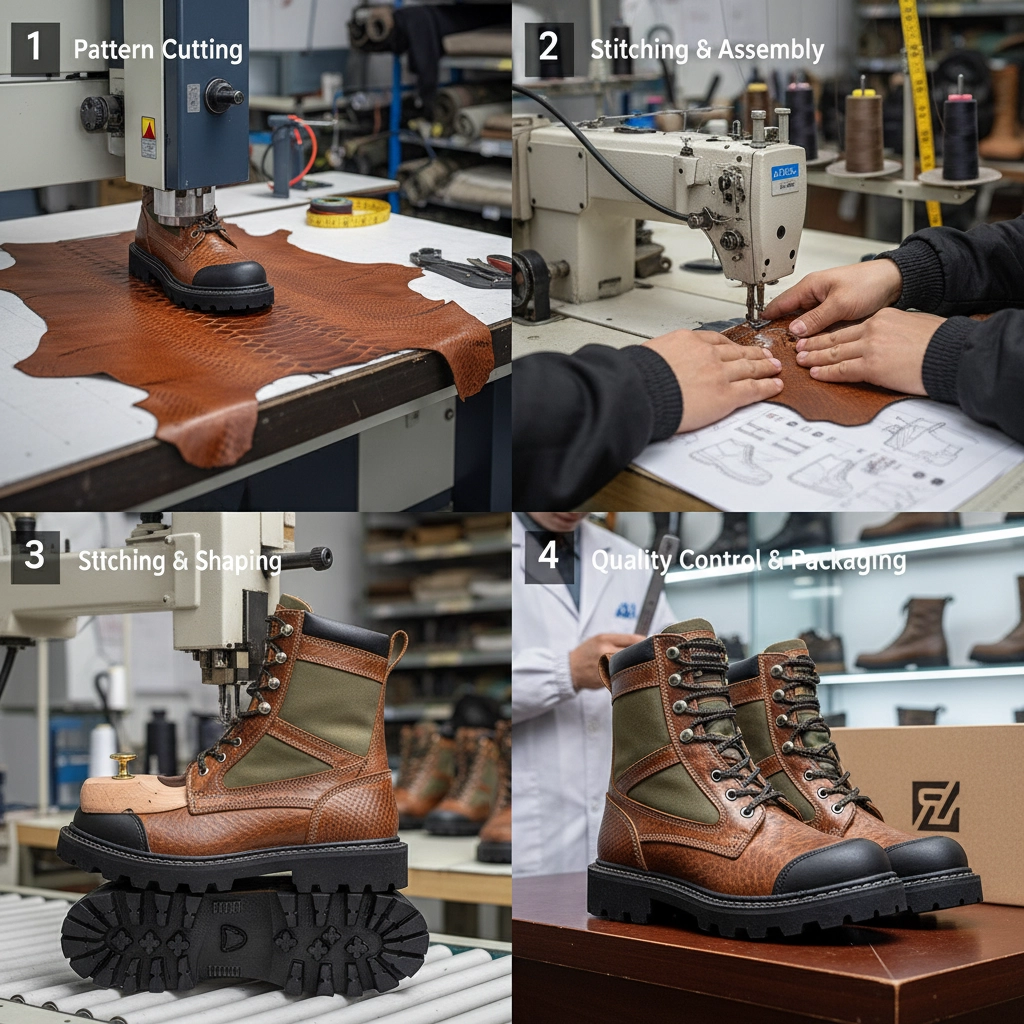
The construction method—whether injection molded or hand-lasted—determines the boot's longevity. Injection molding minimizes seams, which are the primary points of failure where leaks typically originate in lower-quality waterproof footwear.
3Application Scenarios and Product Matching
Matching the specific boot type to the environment is the most critical step in wholesale procurement. For instance, Hunting & Fishing Boots require higher flexibility and specialized traction for muddy terrains, whereas Safety Wellies must include steel toe caps and puncture-resistant midsoles to meet industrial safety regulations.
In military contexts, Army Camouflage Boots prioritize stealth and ruggedness, requiring materials that can withstand abrasion and harsh chemical environments without losing their camouflage properties or waterproof integrity.
For general utility, All Purpose Rubber Boots offer a versatile solution for agricultural workers. These typically feature a mid-calf height to protect against splashes and mud, balancing protection with ease of movement for daily tasks.
4Performance Analysis and Comparative Metrics
When evaluating wholesale options, performance is measured through a combination of waterproof ratings, slip resistance (SRC standards), and weight-to-strength ratios. High-performance boots maintain their elasticity even in sub-zero temperatures, preventing the rubber from cracking.
The efficiency of bulk-sourced boots is often compared against retail standards. Wholesale products from experienced manufacturers typically offer higher consistency in sizing and material thickness across thousands of pairs, reducing the rate of defective returns.
rubber boots wholesale Performance Metrics
As shown in the performance metrics, wholesale sourcing from specialized factories typically results in higher waterproofness and durability compared to generic industry averages, primarily due to stricter quality control and specialized molding equipment.
5Strategic Procurement and Quality Control
Successful rubber boots wholesale procurement involves a multi-stage verification process. First, sample testing should include immersion tests to ensure zero leakage. Second, the sole should be tested for abrasion resistance to estimate the lifespan of the product under heavy use.
Logistics management is equally important. Due to the bulk and weight of rubber boots, optimizing packaging to maximize container space can significantly reduce the landed cost per unit, directly impacting the overall profit margin for distributors.
Collaborating with a factory that has integrated design, production, and sales—such as those with over 30 years of experience—ensures that custom requirements for specific markets, like the Russian or European sectors, are met with precision.
6Emerging Trends in Sustainable Rubber Manufacturing
The industry is shifting toward more sustainable materials to reduce the environmental impact of PVC production. The integration of recycled rubbers and bio-based polymers is becoming a key selling point in the wholesale market, especially for European distributors.
Technological innovations in "smart" rubber are also appearing, including boots with integrated thermal regulation and antimicrobial linings that reduce odors and skin irritation for users wearing the boots for extended periods.
Furthermore, the adoption of automated injection molding allows for tighter tolerances and less material waste, enabling manufacturers to offer competitive wholesale pricing while maintaining high structural integrity.
7Comparative Guide for Wholesale Boot Selection
Selecting the right product line requires a comparison of technical attributes against the specific needs of the end-user. For example, a construction site requires puncture resistance, while a fish farm requires chemical resistance and easy-clean surfaces.
The following table provides a qualitative comparison of common wholesale rubber boot categories to assist procurement officers in making informed decisions based on application and priority.
| Boot Category | Primary Material | Key Advantage | Best Use Case |
|---|---|---|---|
| Safety Wellies | PVC/Steel Toe | Impact Protection | Construction Sites |
| Hunting Boots | Natural Rubber | Silent/Flexible | Forest/Wilderness |
| Fishing Waders | Neoprene/Rubber | Deep Waterproofing | River/Wetlands |
| Army Camo Boots | Reinforced Rubber | Durability/Stealth | Tactical Operations |
| Utility Boots | PVC/EVA Blend | Cost-Efficiency | General Agriculture |
| Fashion Rain Boots | Soft PVC | Aesthetic/Lightweight | Urban Casual Wear |
Ultimately, the choice depends on the balance between the required protection level and the budget. High-spec boots offer lower turnover rates due to their durability, while utility boots provide a cost-effective solution for high-wear environments.
Frequently Asked Questions
Conclusion
Optimizing rubber boots wholesale procurement requires a balanced approach that considers material science, application-specific needs, and rigorous quality control. By moving beyond simple price points and focusing on durability, ergonomic design, and supplier reliability, businesses can ensure their teams are protected while reducing the overall cost of equipment replacement.
For procurement teams seeking reliable, high-capacity waterproof footwear solutions that meet international standards, reviewing available product specifications at www.landwalkpro.com can provide the necessary technical foundation for an informed decision.